• Consulta Web Gratuita
  • Buscar
  • Vivir en España
    • Emprendiendo
    • Trabajando
    • Estudiando
    • Como Nómada Digital
    • Como Investigador
    • Con Residencia No Lucrativa
  • Servicios
    • Movilidad Internacional
    • Residencia No Lucrativa
    • Estancia por Estudios
    • Homologación de Títulos
    • Familiares de españoles y de la UE
    • Residencias iniciales y renovaciones
    • Reagrupación familiar
    • Residencia por razones humanitarias
    • Regularízate con un Arraigo
    • Asilo y Protección Internacional
    • Nacionalidad Española
    • Recursos contra Denegaciones
    • Asistencia Jurídica Letrada
    • Abogado en el Aeropuerto
    • Fiscalidad y Negocios Internacionales
    • Ver todos los servicios →
  • Blog
  • Conócenos
  • Asesorías
  • 641 65 88 93
  • +34 641 65 88 93
  • Calle de Cronos, 63, Planta 1, Oficina 3, San Blas-Canillejas, 28037 Madrid
Instagram Facebook Youtube Linkedin-in X-twitter Tiktok
Logotipo de España Abogados, despacho de extranjería y movilidad internacional en Madrid
  • Consulta Web Gratuita
  • Vivir en España
    • Trabajando
    • Estudiando
    • Emprendiendo
    • Como Nómada Digital
    • Como Investigador
    • Con Residencia No Lucrativa
  • Servicios
    • Movilidad Internacional
      • Residencia como Teletrabajador de carácter internacional
      • Residencia para Profesionales Altamente Cualificados (PAC)
      • Residencia para Emprendedores
      • Residencia para Investigadores
      • Residencia para Profesionales del Sector Audiovisual
      • Residencia por Traslado Intraempresarial
      • Golden Visa: renovación y cambio de vía
    • Residencia No Lucrativa
    • Estancia por Estudios
    • Homologación de Títulos
    • Familiares de españoles y de la UE
      • Familiar de ciudadano español
      • Familiar de ciudadano de la UE
    • Residencias iniciales y renovaciones
    • Reagrupación familiar
    • Residencia por razones humanitarias
    • Regularízate con un Arraigo
      • Arraigo Sociolaboral
      • Arraigo Socioformativo
      • Arraigo Social
      • Arraigo Familiar
      • Arraigo de Segunda Oportunidad
    • Asilo y Protección Internacional
      • Solicitud de Protección Internacional
      • Recursos y contencioso-administrativo contra la denegación
    • Nacionalidad Española
      • Nacionalidad española por residencia
      • Nacionalidad española con Valor de Simple Presunción
      • Nacionalidad española por Opción
    • Recursos contra Denegaciones
    • Asistencia Jurídica Letrada
    • Abogado en el Aeropuerto
    • Fiscalidad y Negocios Internacionales
      • Planificación fiscal
      • Fiscalidad de los teletrabajadores
      • Regímenes especiales: Ley Beckham y «Ley Mbappé»
      • Impuestos en España
    • Ver todos los servicios →
  • Blog
  • Conócenos
  • Buscar
Regularización
Asesorías

Spain Digital Nomad Visa 2026: Requirements, Income and How to Apply

Félix José España González
1 noviembre 2026
Régimen de Movilidad Internacional

Updated November 1, 2026

Leer en español

Quick answer. Spain’s digital nomad visa (officially, the residence for international remote work under Law 14/2013) lets you live in Spain while working remotely for companies or clients outside the country. In 2026 you need to earn at least €2,849 a month (€34,188 a year), have worked with your employer or clients for at least three months, and hold a degree or three years of relevant experience. If you can enter Spain legally, applying from inside the country usually gets you a 3-year permit instead of a 1-year visa.

Everything you need to know about Spain’s digital nomad visa

Who it is for. Remote employees of companies based outside Spain, and freelancers whose clients are mostly outside Spain. Not for EU citizens, who have their own registration route.

How much money. €2,849 a month for the main applicant in 2026, plus €1,068 for a spouse or partner and €356 for each additional family member.

Two ways to apply. At the Spanish consulate in your country (visa of up to 1 year) or from Spain with the UGE-CE (3-year permit, 20 working days legal processing time).

Taxes. Remote employees can opt into the Beckham Law: a flat 24% rate on employment income up to €600,000 for six years. US citizens keep filing in the US.

On this page

  1. Consulate or from Spain: which route to choose
  2. Who can apply
  3. Income requirements for 2026
  4. Documents you need
  5. Social security: the point that decides many cases
  6. If you are moving from the US
  7. Taxes and the Beckham Law
  8. Step by step
  9. Renewal, permanent residence and citizenship
  10. Why applications get denied
  11. Frequently asked questions

Consulate or from Spain: which route to choose

There are two different ways to get what looks like the same permit, and the choice affects how long it lasts, how long it takes and who decides.

Visa at the consulatePermit from Spain (UGE-CE)
Where you applySpanish consulate for the place where you liveFrom Spain, while you are here on a regular stay (a tourist stay counts)
What you getA visa valid for up to 1 yearA 3-year residence permit
Who decidesThe consulateThe Unit for Large Companies and Strategic Groups (UGE-CE)
Processing timeVaries by consulate (weeks or months)20 working days by law, with positive silence if there is no answer; in practice it can take longer
RenewalYou must switch to a residence permit before the visa expires2-year extensions

If you can enter Spain without a visa (US citizens can, for up to 90 days), applying from Spain is usually the better option: three years instead of one and a short legal deadline. The condition is to file a complete, well-built application from day one, because a request for missing documents sends you back to the start.

The consulate route still makes sense if you cannot travel yet, if you need certainty before moving your family, or if your passport requires a Schengen visa to enter.

Who can apply

  • Remote employees. You work under an employment contract for a company outside Spain. The company must authorize remote work from Spain in writing and prove at least one year of real, continuous activity. You cannot work for Spanish clients.
  • Freelancers. You provide services to clients outside Spain under commercial contracts. Up to 20% of your total professional activity can come from clients in Spain, and you must be able to prove it with your invoices.

In both cases, your employment or client relationship must be at least three months old when you apply, and the work must be doable remotely.

Qualifications

You must prove one of these: a university degree or postgraduate degree from a recognized institution, a recognized vocational qualification, or at least three years of professional experience in similar roles. Foreign degrees must be apostilled and translated by a sworn translator. If you rely on experience, you need employer letters, contracts or certificates that describe your duties, not just dates.

Income requirements for 2026

The threshold is a percentage of the Spanish minimum wage (SMI), set by Royal Decree 126/2026 at €1,221 a month in 14 payments, or €17,094 a year.

Household% of SMIPer yearPer month (approx.)
Main applicant200%€34,188€2,849
Plus spouse or partner75%€12,820.50€1,068
Plus each additional family member25%€4,273.50€356
Example: couple with one child300%€51,282€4,273

If a consulate website shows €2,442 a month, it is the same annual amount split into 14 payments instead of 12.

  • Bank statements for the last three months, with transactions and balances. A screenshot of your current balance is not enough.
  • Stable, recurring income. A one-off spike in billing does not support the application.
  • Payslips or invoices that match what reaches your account. If you invoice $4,000 and $1,800 lands in the bank, explain the difference before the authorities ask.
  • If you are paid in dollars, add the European Central Bank reference exchange rate for the period.

Savings help, but they do not replace recurring income.

Documents you need

  • A passport valid for at least one year, with blank pages.
  • The official application form and the fee (form 790, code 038, for the UGE-CE route; the consular fee for the visa route).
  • Criminal record certificates from every country where you lived in the last two years, apostilled, translated and no more than 90 days old, plus a sworn statement of no criminal record for the last five years. In the US, the FBI report apostilled by the Department of State.
  • Company documents proving more than one year of activity, and a letter authorizing remote work from Spain with your role, duties, salary and terms.
  • Your employment or service contract, at least three months old.
  • Your degree, apostilled and translated, or proof of three years of experience.
  • Proof of income: payslips or invoices plus three months of bank statements.
  • Health coverage: Spanish social security, a certificate of coverage under a bilateral agreement, or private health insurance from a company authorized in Spain, with no co-payments, no waiting periods and no coverage limits.
  • For family members: marriage or registered partnership certificates and children’s birth certificates, apostilled and translated.

Social security: the point that decides many cases

  • Your country has a social security agreement with Spain. The US does. You can request a certificate of coverage and keep paying into the US system, but only for a genuine temporary posting. If you move to Spain to work remotely indefinitely, there is no posting and you pay into the Spanish system.
  • No agreement. The foreign company must register with Spanish social security and enroll you, or you register as self-employed (RETA).
  • Freelancers. Usually registered as self-employed in the RETA: about €88.56 a month in the first year and around €427 from the second year in 2026.

A company that refuses to register in Spain is one of the most common reasons an otherwise perfect application stalls. It can be solved, but you need to raise it with your employer before applying.

If you are moving from the US

For Americans, the immigration file is usually simple. The bottleneck is tax and social security.

  • You keep filing in the US. The US taxes by citizenship: Form 1040 every year, FBAR (FinCEN 114) if your foreign accounts together exceed $10,000 at any point in the year, and FATCA (Form 8938) above its thresholds. The Foreign Earned Income Exclusion, the Foreign Tax Credit and the US-Spain tax treaty, with its protocol in force since November 2019, help avoid double taxation.
  • W-2 employees. The cleanest case: your company signs the remote work authorization. The key question is social security and whether a certificate of coverage applies.
  • 1099 contractors. You apply as self-employed: contracts at least three months old, stable billing and no more than 20% from Spanish clients. Usually means registering in the RETA.
  • LLC owners. The most technical case. If you are the only member, the authorities may treat you and the "foreign company" as the same person. It can work, but contracts, payroll and proof of more than a year of real activity have to be structured carefully.

Coordinate a Spanish tax adviser and your US CPA before you set your arrival date, because the day you arrive determines your tax year. You can read more in moving to Spain from the US.

Taxes and the Beckham Law

You become a Spanish tax resident if you spend more than 183 days in Spain in a calendar year, or if the center of your economic interests is here. Tax residents pay Spanish income tax on their worldwide income, at progressive rates that exceed 47% in some regions.

The impatriate regime, known as the Beckham Law (article 93 of the Spanish Income Tax Law, amended by Law 28/2022), explicitly covers remote employees. For freelancers, access is not automatic.

ItemHow it works
Tax rateFlat 24% on employment income up to €600,000; 47% above that
DurationThe year you move plus 5 more tax years (6 in total)
RequirementNot having been a Spanish tax resident in the previous 5 tax years
How to applyForm 149, within 6 months of registering with Spanish social security
Annual returnForm 151 instead of the ordinary return
Form 720Not required while the regime applies

The 6-month deadline for Form 149 is final. If you miss it, you lose the regime for that move. It is the most expensive tax mistake we see.

If you do not use the regime, you must report assets abroad on Form 720 (accounts, securities and real estate, when each group exceeds €50,000) and crypto held abroad on Form 721. This section is general information, not individual tax advice.

Step by step

  1. Diagnosis. Employee or freelancer, consulate or UGE-CE, social security agreement or not, and whether the Beckham Law makes sense for you.
  2. Slow documents first. Apostilled criminal records, apostilled degree and sworn translations.
  3. Company documents. Company registration showing more than a year of activity and the remote work authorization letter.
  4. Financial documents. Three months of bank statements, payslips or invoices and, if needed, conversion to euros.
  5. Health coverage and social security. Certificate of coverage, company registration or private insurance with no co-payments.
  6. Fee and filing. Form 790 code 038 and online filing with the UGE-CE, or an appointment at the consulate.
  7. Decision. 20 working days by law on the UGE-CE route.
  8. Fingerprints and TIE. An appointment with the National Police for your fingerprints and your foreigner ID card (TIE).
  9. Registration, NIE and bank account. Register at your town hall (padrón) first: without it there is no public health card, and many banks will not open an account without an NIE.

Renewal, permanent residence and citizenship

WhenWhat happens
Year 1Visa (consulate route) or first year of the 3-year permit (UGE-CE route)
Year 3End of the initial permit: 2-year extension if you still meet the requirements
Year 5Long-term residence: you no longer depend on your remote job or income
Year 10Spanish citizenship by residence under the general rule (2 years for nationals of Ibero-American countries)

Why applications get denied

  • Income below the threshold, or irregular during the period shown.
  • Less than three months of employment or client relationship.
  • A company with less than a year of activity, or whose real activity is not proven.
  • Incomplete criminal records: a missing country or a missing apostille.
  • Insufficient health insurance: co-payments, waiting periods, coverage limits or an insurer not authorized in Spain.
  • Degree not proven, or experience described without duties.
  • Freelancers billing more than 20% to Spanish clients.
  • Translations that are not sworn, or faulty apostilles.
  • Inconsistencies between the contract, the company letter and the bank statements.
  • Not answering a request for documents within 10 working days.

A denial does not close the door. If the UGE-CE denies it, the usual appeal is a recurso de alzada within one month. If a consulate denies the visa, you can file a reconsideration appeal within one month or go to the courts within two months. Often the most efficient solution is to file a corrected application instead.

Frequently asked questions

How much do I need to earn for Spain’s digital nomad visa in 2026?

At least €2,849 a month (€34,188 a year) for the main applicant. Add €1,068 a month for a spouse or partner and €356 for each additional family member.

Can I apply for the digital nomad visa from Spain as a tourist?

Yes. If you are in Spain on a regular stay, including a visa-free tourist stay, you can apply with the UGE-CE. That route gives a 3-year permit instead of a 1-year visa.

Can I work for Spanish clients?

Remote employees cannot. Freelancers can, as long as Spanish clients make up no more than 20% of their total professional activity.

Do I need a university degree?

No. You can qualify with a university degree, a recognized vocational qualification, or at least three years of experience in similar roles.

Can I bring my family?

Yes. Your spouse or partner and children can apply with you. You need to prove extra income for each of them and provide apostilled, translated family certificates.

Do US citizens still pay US taxes while living in Spain?

US citizens must keep filing in the US. The Foreign Earned Income Exclusion, the Foreign Tax Credit and the US-Spain tax treaty help avoid paying twice on the same income.

Let’s talk about your case

Shall we check if you qualify for the digital nomad visa?

With your contract, your income and your family on the table, in one session you will know which route fits you, how much you need to prove and what to prepare first.

Book a consultation in EnglishFélix José España González · Lawyer registered with the Madrid Bar Association (ICAM), no. 127450

Legal framework

  • Law 14/2013, of September 27, on support for entrepreneurs and their internationalization, as amended by Law 28/2022 (startup law): residence for international remote work.
  • Royal Decree 126/2026: Spanish minimum wage for 2026.
  • Law 35/2006 on Personal Income Tax, article 93: special regime for workers moving to Spain (Beckham Law).
  • US-Spain Income Tax Convention and its Protocol, in force since November 2019.
  • Regulation (EU) 2018/1806: countries whose nationals are exempt from the visa requirement.

Keep reading

Moving to Spain from the USMoving to Spain from the USLiving legally in the US? Digital nomad, non-lucrative, student, Blue Card or entrepreneur: 2026 requirements, money, consulates and taxes, by a Madrid lawyer.Read more →Immigration lawyer in SpainImmigration lawyer in SpainImmigration lawyer in Madrid: digital nomad and non-lucrative visas, family reunification and appeals. Madrid Bar no. 127450. English consultation 100 €.Read more →Book a consultation in EnglishBook a consultation in EnglishBook a 45-minute Legal Consultation in English with an immigration expert from España Abogados, Madrid. Video call, 100 €. Choose your date and time online.Read more →Residencia de nómada digital (en español)Residencia de nómada digital (en español)Guía 2026 del visado y la residencia de nómada digital en España: requisitos, ingresos mínimos, documentos, plazos, fiscalidad y Seguridad Social.Read more →

España Abogados

Despacho español · Extranjería, nacionalidad y fiscalidad · Madrid

ICAM 127450

Somos un despacho español, no una gestoría ni una agencia, dirigido por Félix José España González, abogado colegiado nº 127450 del Ilustre Colegio de la Abogacía de Madrid, y tramitamos ante la Administración española desde España. Atendemos por videollamada en horario de Estados Unidos: Este, Centro y Pacífico.


Qué tramitamos en España

Arraigo

  • sociolaboral
  • social
  • socioformativo
  • de segunda oportunidad
  • familiar

Visados y residencia

  • teletrabajador internacional
  • no lucrativa
  • estancia por estudios
  • búsqueda de empleo
  • cuenta ajena
  • cuenta propia
  • emprendedores

Familia

  • tarjeta de familiar de ciudadano de la UE
  • reagrupación familiar

Protección internacional

  • asilo y refugio
  • residencia por razones humanitarias

Mantener la residencia

  • renovaciones
  • modificaciones
  • larga duración

Nacionalidad española

  • por residencia
  • por opción
  • prueba CCSE
  • expediente de Registro Civil

Recursos

  • reposición
  • alzada
  • contencioso-administrativo
  • silencio negativo

Fiscalidad

  • residencia fiscal
  • régimen de impatriados (Ley Beckham)
  • convenio España-EE. UU.
  • modelos 720 y 721
Cómo armamos tu plan migratorio
  1. Analizamos tu situación personal, familiar y tus ingresos.
  2. Elegimos la vía que de verdad encaja con tu caso.
  3. Calculamos la solvencia económica que te van a exigir.
  4. Ordenamos y te solicitamos toda la documentación necesaria: apostillas, traducciones juradas y antecedentes.
  5. Fijamos el calendario de cada trámite, desde la residencia hasta la nacionalidad.
Cuéntanos tu caso

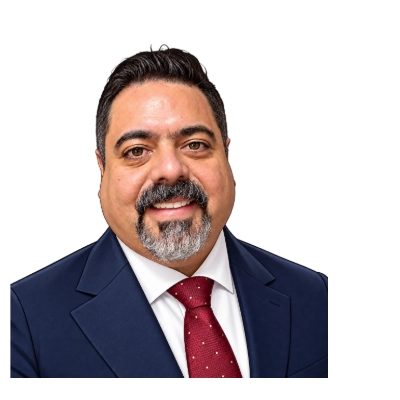
Félix José España González

Soy Félix José España González, abogado colegiado n.º 127450 del Ilustre Colegio de la Abogacía de Madrid y director de España Abogados, despacho especializado en extranjería, movilidad internacional, fiscalidad y nacionalidad española. Ayudo a personas y empresas a establecerse legalmente en España y divulgo toda la información sobre emigrar y establecerse en España a través de redes sociales. Como emigrante, sé por experiencia propia lo que es llegar a un país nuevo y tener que entenderse con su Administración: por eso aquí cada trámite se explica con la norma delante y entendiendo lo que es emigrar.


Logotipo de España Abogados en blanco con el trazo central en amarillo, para fondos granate

Despacho de extranjería dirigido por el abogado Félix José España González (ICAM 127450), experto en emprendimiento y fiscalidad y miembro de la Asociación Española de Asesores Fiscales, con un equipo de expertos en extranjería, nacionalidad española y tramitación. Consolidados con el objetivo de atender, guiar y asesorar a todo extranjero que desee estudiar, trabajar y vivir en España.

Conócenos
  • Asesorías
  • Vivir en España
  • Servicios
  • Blog
  • Conócenos

Enlaces de Interés

  • BOEs de Notificaciones de Asilo
  • Puntos de Contacto para solicitar Protección Internacional
  • Fechas orientativas de resolución de trámites de Extranjería
  • Calculadoras de extranjería y nacionalidad
  • Canal de Denuncias de España Abogados
  • Normativa Aplicable
  • Venezolanos en España: resumen y documentos
  • Aquí tienes todo
  • Preguntas frecuentes
Instagram Facebook Youtube Linkedin-in X-twitter Tiktok
Llámanos
  • 641 65 88 93
Escríbenos
  • +34 641 65 88 93
Encuéntranos

Coregram Marketing. España Abogados © Todos los derechos reservados.

  • Aviso legal
  • Pagos y cancelaciones
  • Política de privacidad
  • Política de cookies
Logotipo de España Abogados
Cookies

Usamos cookies propias y de terceros (Google y Meta) para analizar cómo se usa la web, para mostrarle publicidad en Facebook e Instagram basada en un perfil elaborado con su navegación aquí (por ejemplo, las páginas que visita) y para mostrar contenidos de terceros como mapas y vídeos. Pulse «Aceptar» para permitirlas todas, «Denegar» para rechazarlas o «Ver preferencias» para elegir por finalidad. Rechazarlas no le impide usar la web y puede cambiar su elección cuando quiera.

Funcional Siempre activo
Imprescindibles para que la web funcione y para guardar su elección sobre las cookies. Siempre están activas.
Preferencias
El almacenamiento o acceso técnico es necesario para la finalidad legítima de almacenar preferencias no solicitadas por el abonado o usuario.
Estadísticas
Nos permiten saber cuántas personas visitan cada página y cómo llegan a ella (Google Analytics), para mejorar los contenidos. El almacenamiento o acceso técnico que se utiliza exclusivamente con fines estadísticos anónimos. Sin un requerimiento, el cumplimiento voluntario por parte de tu proveedor de servicios de Internet, o los registros adicionales de un tercero, la información almacenada o recuperada sólo para este propósito no se puede utilizar para identificarte.
Marketing
Permiten a Meta medir nuestros anuncios y mostrarle publicidad en Facebook e Instagram según un perfil elaborado con su navegación en esta web. Incluyen también los contenidos de terceros incrustados, como Google Maps y YouTube.
  • Administrar opciones
  • Gestionar los servicios
  • Gestionar {vendor_count} proveedores
  • Leer más sobre estos propósitos
Ver preferencias
  • {title}
  • {title}
  • {title}